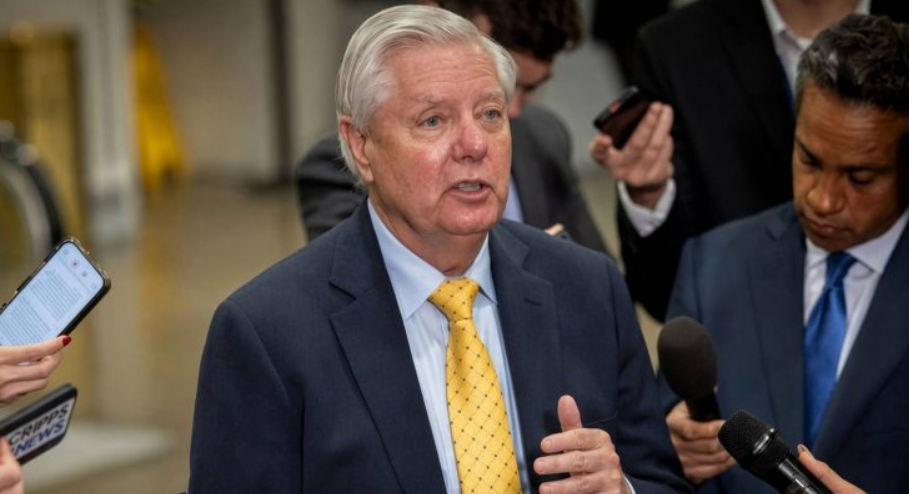
Election Called? Viral Lindsey Graham Rumor Sparks Social Media Frenzy and Raises Questions About Online Headlines
In today’s fast-moving digital world, it takes only a few words to capture national attention.
Recently, social media users were greeted with a dramatic and mysterious headline
“ELECTION CALLED — LINDSEY GRAHAM HAS BEEN… See More” The incomplete message spread rapidly across Facebook, X, Instagram, and other social platforms. Thousands of users clicked, shared, commented, and speculated about what the missing words might reveal.
Had Senator Lindsey Graham lost an election
Was he retiring? Had a major political announcement just been made?
Or was something entirely different happening
Within hours, the vague headline had generated widespread discussion, illustrating how modern social media algorithms reward curiosity, uncertainty, and emotional reactions. More importantly, the episode highlighted a growing challenge facing news consumers everywhere: distinguishing between verified information and attention-grabbing content designed primarily to generate clicks.
The Power of an Incomplete Headline The viral post contained very little actual information
That was precisely why it worked. Human beings naturally seek closure when presented with incomplete information.
Psychologists sometimes refer to this as a “curiosity gap.”
When people encounter a statement that feels unfinished, the brain becomes motivated to find the missing answer. The headline achieved this perfectly.
Instead of providing facts, it presented a mystery
Readers were left wondering: What election? What happened to Lindsey Graham? Why wasn’t the information included?
Was this breaking news? The uncertainty itself became the story.
For decades, the South Carolina senator has occupied a prominent position in national politics
Who Is Lindsey Graham? Part of the reason the headline attracted so much attention is that Lindsey Graham remains one of the most recognizable political figures in the United States. Known for his outspoken style and frequent media appearances, Graham has been involved in discussions regarding:
National security Foreign policy Judicial nominations Immigration Military affairs Congressional leadership Because of his visibility, even routine developments involving Graham often generate significant public interest
When a headline suggests something major has happened, many people immediately pay attention. The Rise of Viral Political Content The Lindsey Graham rumor reflects a broader trend in modern media.
Political content frequently performs well online because it combines several powerful elements
Strong Emotions Politics often evokes passion, concern, excitement, or frustration. High Public Interest Political decisions affect millions of people.
Constant News Cycle New developments emerge daily
Social Sharing People frequently share political content with friends and family. As a result, political headlines are often optimized to maximize engagement.
Unfortunately, engagement and accuracy do not always align
Why “See More” Headlines Work One of the most common techniques used in viral content is the incomplete headline. Examples include:
“You Won’t Believe What Happened Next…” “The Truth About This Politician Finally Revealed…” “Breaking
Major Announcement Leaves Everyone Shocked…” “Election Called — See More…” These headlines deliberately withhold key information. The goal is simple: Generate clicks.
Every click creates traffic
Traffic can generate advertising revenue. The business model rewards curiosity.
The result is an internet filled with headlines designed to attract attention before providing context
The Psychology Behind Online Speculation When information is incomplete, people naturally fill gaps with assumptions. This phenomenon becomes especially pronounced during political discussions.
Supporters may interpret a vague headline positively
Critics may interpret it negatively. Both groups often project existing beliefs onto limited information.
This helps explain why social media discussions can become intense even when few facts are available
People aren’t merely reacting to information. They’re reacting to expectations, assumptions, and prior experiences.
The Challenge of Modern Information Consumption The Lindsey Graham rumor serves as a reminder of how information now spreads
Historically, people consumed news through newspapers, television broadcasts, and radio programs. Editors typically reviewed stories before publication.
Today, information moves much faster
Anyone can publish content instantly. Social media platforms allow stories to reach millions of users within minutes.
This creates opportunities for
Rapid communication Citizen journalism Diverse viewpoints But it also creates challenges. False or misleading information can spread quickly.
Rumors can gain traction before verification occurs
Incomplete stories can generate confusion. Why Political Rumors Spread So Quickly Political rumors often travel faster than ordinary news.
Several factors contribute to this
Existing Divisions Political audiences frequently hold strong opinions. Emotional Investment People care deeply about political outcomes.
Confirmation Bias Individuals often favor information that supports existing beliefs
Social Sharing Incentives Users share content that generates reactions. Combined, these factors create ideal conditions for viral political speculation.
The Role of Social Media Algorithms Modern social media platforms prioritize engagement
Content that generates reactions is often shown to more users. This includes content that produces:
Excitement Anger Surprise Curiosity Debate Algorithms generally measure engagement rather than accuracy
As a result, emotionally charged headlines can spread rapidly. This does not necessarily mean platforms intentionally promote misinformation.
Rather, systems designed to maximize engagement sometimes amplify content that captures attention most effectively
The Importance of Verification One lesson from episodes like this is the importance of verification. Before accepting or sharing dramatic claims, experts recommend asking several questions:
What Is the Source? Is the information coming from a reputable organization
Is There Independent Confirmation? Have multiple credible outlets reported the same information?
Does the Headline Match the Content? Sometimes headlines exaggerate what stories actually say.
Are Key Details Missing? Incomplete information should encourage caution rather than certainty
Verification remains one of the most effective defenses against misinformation. Political Figures and Public Attention High-profile politicians often become targets of rumors simply because people recognize their names.
Familiarity drives engagement
When readers see names like: Lindsey Graham Donald Trump Joe Biden Barack Obama Hillary Clinton they are more likely to click.
Content creators understand this
As a result, well-known public figures frequently appear in viral posts regardless of whether major developments have actually occurred. The Economics of Click-Driven Media Understanding why these headlines exist requires understanding online economics.
Many websites rely on advertising revenue
Advertising revenue depends on: Page views User engagement Traffic volume More clicks often mean more revenue.
This creates incentives to produce headlines that maximize curiosity
The challenge is that attention-grabbing headlines sometimes prioritize engagement over clarity. The result can be confusion among readers seeking straightforward information.
Why Critical Thinking Matters Episodes like the Lindsey Graham rumor highlight the importance of critical thinking
Critical thinking involves: Asking questions Evaluating sources Considering evidence Avoiding immediate conclusions These habits help readers navigate increasingly complex information environments.
Rather than reacting instantly, thoughtful consumers pause and seek context
This approach reduces the likelihood of being misled by incomplete or misleading content. The Broader Impact on Public Discourse The spread of vague political rumors has consequences beyond individual confusion.
Repeated exposure to questionable content can affect
Public trust Political discussions Media credibility Civic engagement When audiences struggle to distinguish between verified reporting and viral speculation, confidence in information systems may decline. This makes responsible journalism and media literacy increasingly important.
It demonstrated
Learning From the Lindsey Graham Rumor The viral headline involving Lindsey Graham may ultimately be remembered less for its specific content and more for what it revealed about modern communication. The power of curiosity-driven headlines The speed of social media sharing The influence of political polarization The importance of source verification Most importantly, it illustrated how quickly incomplete information can become a major public conversation.
The Future of Political Information As technology continues evolving, similar situations will likely become more common
Artificial intelligence, social media, and digital publishing tools have dramatically lowered barriers to content creation. This offers tremendous opportunities for communication.
It also increases the need for media literacy
Future news consumers will need skills that include: Source evaluation Fact-checking Context analysis Information verification These abilities are becoming essential components of informed citizenship.
Conclusion The viral “Election Called — Lindsey Graham Has Been…” headline demonstrates how easily incomplete information can capture public attention in today’s digital landscape
By leaving critical details unanswered, the post sparked widespread speculation and discussion despite providing little actual information. The episode serves as a valuable reminder that curiosity should be accompanied by caution.
Before sharing dramatic political claims, readers should seek verified sources, examine context, and resist the temptation to draw immediate conclusions
In an age where headlines travel faster than facts, the ability to think critically has become one of the most important skills a citizen can possess. Whether the subject is Lindsey Graham or any other public figure, responsible information consumption remains essential for healthy public discourse.
The next viral headline is only a click away—but understanding it requires more than curiosity
It requires patience, verification, and a commitment to separating fact from speculation.